
Dimensions
Dimensions
Standard containers, also called general purpose containers, are enclosed on all sides. They come in several types:
Containers with doors at one or both ends.
Containers with doors at one or both ends and doors spanning the length of one or both sides.
Containers with doors at one or both ends and doors on one or both sides.
These containers vary in dimensions and weight, offering a diverse range of options for cargo transportation.


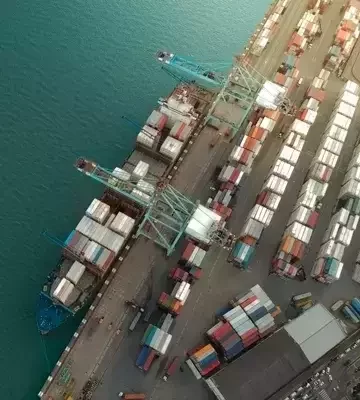
20ft Standard
Inside Length:
5.895 meters
Inside Width:
2.350 meters
Inside Height:
2.392 meters
Door Width:
2.340 meters
Door Height:
2.292 meters
Capacity:
33 cubic meters
Tare Weight:
2230 kilograms
Max Cargo Weight:
28230 kilograms
40ft Standard
Inside Length:
12.029 meters
Inside Width:
2.345 meters
Inside Height:
2.392 meters
Door Width:
2.340 meters
Door Height:
2.292 meters
Capacity:
67 cubic meters
Tare Weight:
3780 kilograms
Max Cargo Weight:
26700 kilograms
40ft High-Cube
Inside Length:
12.024 meters
Inside Width:
2.350 meters
Inside Height:
2.697 meters
Door Width:
2.340 meters
Door Height:
2.597 meters
Capacity:
76 cubic meters
Tare Weight:
4020 kilograms
Max Cargo Weight:
26460 kilograms
45ft High-Cube
Inside Length:
13.556 meters
Inside Width:
2.352 meters
Inside Height:
2.700 meters
Door Width:
2.340 meters
Door Height:
2.597 meters
Capacity:
86 cubic meters
Tare Weight:
4800 kilograms
Max Cargo Weight:
27700 kilograms
Open Top
Open-top containers are characterized by corrugated steel walls and wooden floors. They feature removable bows and a tarpaulin roof, along with swiveling door headers, facilitating easy loading and unloading via crane or crab. While they support tall cargo and allow packing from above or through the doors, they are not designed for overheight cargoes. Lashing rings, capable of securing loads up to 1,000 kg, are installed in upper and lower side rails and corner posts. Open-top containers are typically available in 20' and 40' dimensions and are used for general dry cargo, especially for loading and unloading by crane or crab and accommodating tall cargo.
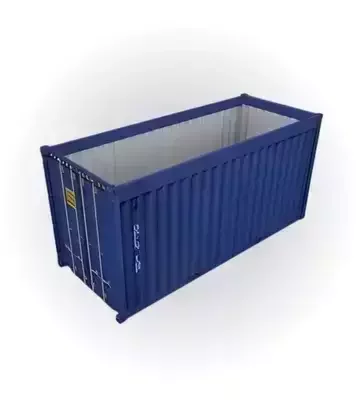
20ft Open Top
Inside Length:
5.888 meters
Inside Width:
2.345 meters
Inside Height:
2.315 meters
Door Width:
2.286 meters
Door Height:
2.184 meters
Capacity:
32 cubic meters
Tare Weight:
2250 kilograms
Max Cargo Weight:
30480 kilograms
40ft Open Top
Inside Length:
12.029 meters
Inside Width:
2.342 meters
Inside Height:
2.326 meters
Door Width:
2.341 meters
Door Height:
2.274 meters
Capacity:
65 cubic meters
Tare Weight:
3810 kilograms
Max Cargo Weight:
26670 kilograms
It's important to note that while these are the typical parameters for a open top container, slight variations may occur depending on the specific container manufacturer or model.
Flatrack
Flatracks are specialized containers featuring a sturdy steel frame, a softwood floor, and either fixed or collapsible end walls, available in 20' and 40' sizes. Lashing rings, installed in side rails, corner posts, and the floor, support loads up to 2000 kg for 20' flatracks and up to 4000 kg for 40' flatracks. Some 20' flatracks include forklift pockets, while 40' flatracks feature gooseneck tunnels and lashing winches with 2 metric ton belts. Stanchions may be added for specific cargoes. Primarily used for heavy-lifts and oversized cargoes, flatracks offer flexibility for transporting overheight or overwidth items.
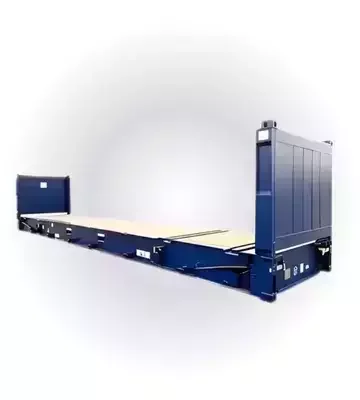
20ft Flatrack
Inside Length:
5.698 meters
Inside Width:
2.230 meters
Inside Height:
2.255 meters
Door Width:
0.000 meters
Door Height:
0.000 meters
Capacity:
0 cubic meters
Tare Weight:
2500 kilograms
Max Cargo Weight:
21500 kilograms
40ft Flatrack
Inside Length:
11.832 meters
Inside Width:
2.228 meters
Inside Height:
2.981 meters
Door Width:
0.000 meters
Door Height:
0.000 meters
Capacity:
0 cubic meters
Tare Weight:
4200 kilograms
Max Cargo Weight:
40800 kilograms
It's important to note that while these are the typical parameters for a Flatrack, slight variations may occur depending on the specific container manufacturer or model
Refrigerated
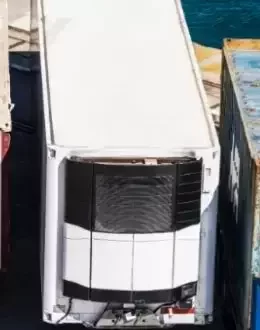
Refrigerated containers, designed to ISO standards, feature integral refrigeration units that impact internal volume and payload. During ship transport, they connect to onboard power supplies; if insufficient, "power packs" with diesel generators are used. At terminals, containers link to the facility's power supply. For road and rail, most units use generator sets. Air circulates bottom to top, cooled by the refrigeration unit and returned as cold air. Gratings on the floor aid airflow, as do pallets, creating channels. Side walls facilitate airflow. Cargo placement allows vertical airflow. Integral units regulate temperature and fresh air exchange, crucial for perishables like fruits. They monitor air temperatures for control and cargo integrity. Containers can be stowed above or below deck on ships, with above-deck stowage aiding heat dissipation but increasing refrigeration demands due to solar exposure.
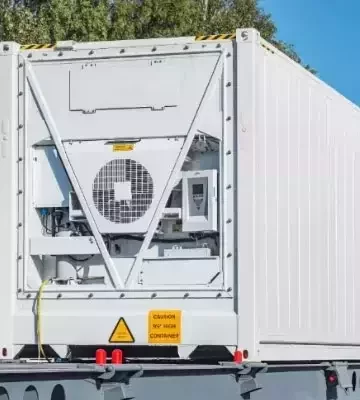
20ft Refrigerated
Inside Length:
5.724 meters
Inside Width:
2.286 meters
Inside Height:
2.014 meters
Door Width:
2.286 meters
Door Height:
2.067 meters
Capacity:
26 cubic meters
Tare Weight:
2550 kilograms
Max Cargo Weight:
21450 kilograms
40ft Refrigerated
Inside Length:
11.840 meters
Inside Width:
2.286 meters
Inside Height:
2.120 meters
Door Width:
2.286 meters
Door Height:
2.195 meters
Capacity:
60 cubic meters
Tare Weight:
3850 kilograms
Max Cargo Weight:
26630 kilograms
It's important to note that while these are the typical parameters for a Refrigerated container, slight variations may occur depending on the specific container manufacturer or model.
Demmurage & Detention
Demurrage and detention charges in shipping occur when containers exceed the allotted free time provided by carriers. Demurrage applies to containers inside the terminal, incurred if they're not picked up promptly. Detention is for containers outside the terminal, triggered if they're not returned to the port or depot within the specified time. Free time varies by port and carrier, with charges incurred beyond this period. It's crucial to monitor and plan for these fees to avoid additional costs and delays in the shipping process.